Step
Deadline
ProvisionPresent the cheque | Within its validity, three months from the date on the cheque | Section 138(a); RBI rules on cheque validity
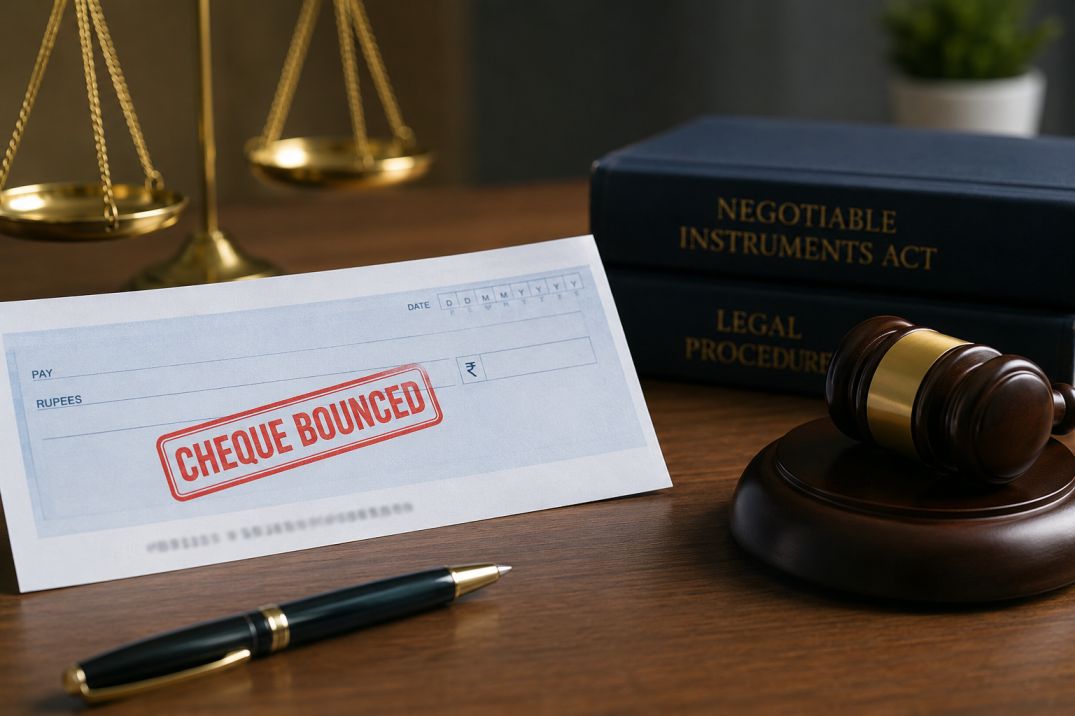
Bank returns it unpaid | Return memo states the reason ("funds insufficient", "exceeds arrangement") | Section 138
Send legal notice to the drawer | Within 30 days of receiving the bank's information | Section 138(b)
Drawer's time to pay | 15 days from receipt of the notice | Section 138(c)
File the complaint | Within one month after the 15 days expire | Section 142(1)(b)
Court where you file | Where the payee's bank branch (where the cheque was presented) is located | Section 142(2)
Which bounces count under Section 138?
Cheque bounce legal notice format
LEGAL NOTICE UNDER SECTION 138 OF THE NEGOTIABLE INSTRUMENTS ACT, 1881
How to file a cheque bounce case
- Wait for the 15 days to pass after the drawer receives the notice. Calculate from the date of delivery on the tracking record.
- Prepare the complaint under Sections 138 and 142, with an affidavit of evidence. Attach the original cheque, return memo, notice, postal receipts, tracking or acknowledgement, and proof of the underlying debt.
- File before the Magistrate with jurisdiction over the payee's bank branch where the cheque was presented, within one month of the cause of action.
- Cognizance and summons. If the court is satisfied, it issues summons to the accused.
- Interim compensation. Under Section 143A, introduced in 2018, the court may order the accused to pay up to 20% of the cheque amount as interim compensation during the trial. It's discretionary and the order must give reasons.
- Summary trial and evidence. Section 143 contemplates summary trial. The accused can try to rebut the presumption of debt.
- Settlement at any stage. The offence is compoundable under Section 147. Courts encourage settlement, and the Supreme Court's guidelines in Damodar S. Prabhu v. Sayed Babalal H. (2010) set graded costs for compounding at later stages.
- Judgment and appeal. On conviction, the accused can appeal; under Section 148 the appellate court may require deposit of at least 20% of the fine or compensation.
Company cheques and directors
"New rules for cheque bounce": what's actually changed
- Section 143A (2018): interim compensation up to 20% during trial.
- Section 148 (2018): deposit of at least 20% on appeal.
- BNSS, 2023: from 1 July 2024, the Bharatiya Nagarik Suraksha Sanhita replaced the Code of Criminal Procedure for procedure in criminal cases, including summons and trial in Section 138 complaints. The Section 138 offence itself is unchanged.
Common defences, and how to pre-empt them
- "No legally enforceable debt." Keep the loan agreement, invoices, ledger or messages proving the liability.
- "It was only a security cheque." The Supreme Court has held that a security cheque can still attract Section 138 if the debt had become due when it was presented. Document when the liability crystallised.
- "I never received the notice." Proof of dispatch to the correct address raises a presumption of service. Send to every address and keep the records.
- "The complaint is time-barred." Calculate every date from the documents, not memory.
If you've received a cheque bounce notice
- Note the date you received the notice. Your 15 days run from receipt, not from the date printed on the notice.
- Check the facts. Was the cheque yours, was it issued for a real debt, and is the amount due? If it was a security cheque for a debt that hadn't fallen due, or the debt was already paid, gather the proof.
- If the amount is genuinely owed, pay it by a traceable method within 15 days and get a written acknowledgement. This ends the criminal exposure for that cheque.
- If you dispute it, reply in writing within the period, setting out why the cheque wasn't for a legally enforceable debt. The reply becomes your early defence on record.
- Don't ignore it. Ignoring the notice doesn't stop the complaint; it just means the court hears only the payee's side at the start.
Ab Rent Agreement ghar baithe!
Govt-authorised digital stamp paper, Aadhaar eSign for all parties, signed copy emailed. 10 min mein ready.
Frequently asked questions
Marked up with FAQPage schema so answers can appear directly in search results.
What is the time limit to send a cheque bounce notice?
Within 30 days of receiving the bank's return memo or other information that the cheque was dishonoured, under Section 138(b) of the NI Act.
How many days does the drawer get to pay after the notice?
Fifteen days from the date the drawer receives the notice. The complaint can be filed only after these 15 days expire.
When should a cheque bounce complaint be filed?
Within one month after the 15-day payment period ends. The court may condone delay for sufficient cause.
Where is a cheque bounce case filed?
Before the Magistrate where the payee's bank branch, in which the cheque was presented for collection, is located, under Section 142(2).
What is the punishment for cheque bounce?
Imprisonment of up to two years, a fine of up to twice the cheque amount, or both, under Section 138.
Is cheque bounce a criminal offence?
Yes. Dishonour for insufficient funds, followed by non-payment after notice, is a criminal offence under Section 138. It is also compoundable, so it can be settled.
What is interim compensation under Section 143A?
The court may order the accused to pay up to 20% of the cheque amount to the complainant during the trial. It's discretionary and requires a reasoned order.
Can a security cheque lead to a Section 138 case?
Yes, if the underlying debt had become due when the cheque was presented. Whether that's so depends on the facts.
Can a cheque bounce case be settled?
Yes. Section 147 makes the offence compoundable at any stage, and courts encourage settlement, with graded costs at later stages.
Is a legal notice mandatory for a cheque bounce case?
Yes. Without a valid notice within 30 days and expiry of the 15-day payment period, the offence under Section 138 isn't complete.
This article is general information, not legal advice on your specific matter. For advice on your own facts, talk to an advocate on Law At Ease.